In 2025, the number of American workers represented by a union climbed to 16.5 million, the highest share of unionized workers in 16 years. During an era of declining union membership, this is no small feat. The number of workers who long to be part of a union, however, is far higher—more than 50 million.
There’s a reason so many workers are clamoring for union representation. A new report from the Economic Policy Institute (EPI) argues that tripling union membership could radically change workers’ lives, ushering in the type of wage growth that helped foster a robust middle class in the 1950s.
“Right now, almost every conversation about affordability focuses entirely on prices, as if the only way to make life more affordable is to make things cheaper—but affordability depends on both prices and pay,” EPI President Heidi Shierholz said during a press conference Wednesday. “There is one institution that has consistently proven capable of raising pay, and that is unions.”
If union membership increased to 30% of the labor force, the median worker could see a 14.5% raise, according to the EPI’s findings. That’s the equivalent of more than $7,700 per year, or nearly $270,000 over the course of a 35-year career. In total, this boost in unionization would put an additional $1.2 trillion in workers’ pockets annually.
 Unions
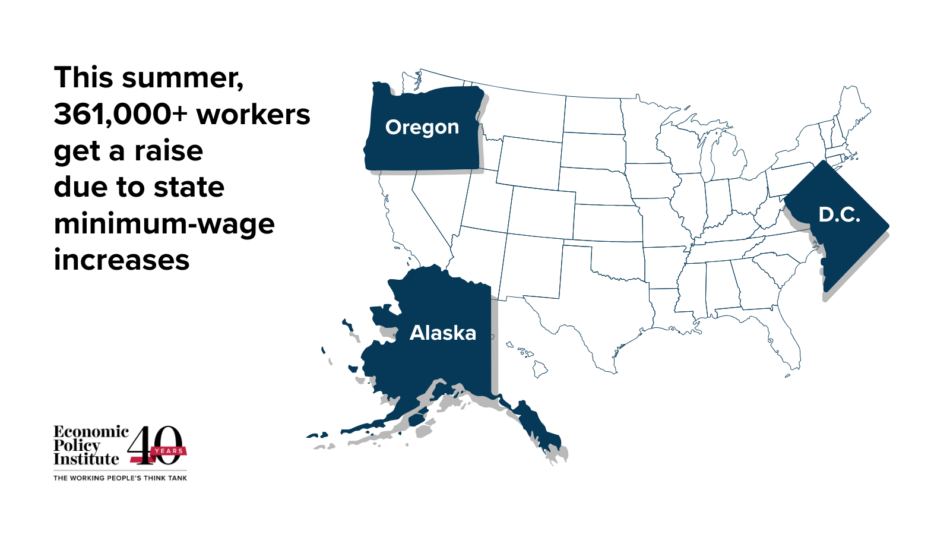 Minimum wage
 Corporate power
 Child labor