EPI's fight for multiracial worker power in uncertain times
2024 Impact Report
A letter from President Heidi Shierholz
Dear friends and partners,
For nearly 40 years, the Economic Policy Institute (EPI) has provided in-depth analysis on the economic conditions impacting working people—and strategic solutions to build multiracial worker power—to journalists, policymakers, advocates, and union activists. As we reflect on 2024, I’m struck by how urgently EPI’s work has been needed and how powerfully it has resonated.
2024 was a year defined by intense policy debates over the direction of our economy. In those debates, EPI was a driving force—providing data, analysis, and a deeply rooted conviction that working people must share in the prosperity they help create.
Our team produced timely research that helped shape the national conversation on inflation, unions, labor markets, immigration, inequality, and more. We provided a steady stream of policy ideas to raise wages, expand worker power, and make the economy work for the many, not the few.
We didn’t do this alone. Our work informed—and was informed by—advocates on the ground, union organizers, grassroots coalitions, congressional allies, and journalists across the country.
In this report, you will see highlights from the diligent work of our teams over the past year, such as our work highlighting the gross disparity between CEO pay and worker pay; our state policy team’s successes in a number of minimum wage and paid sick days ballot fights; and reports exposing the dangers of school vouchers and the need to invest more in K–12 public education staff.
As we navigate the sweeping policy battles of 2025—shaping the future of our economy, social insurance systems, immigration system, and more—I remain deeply grateful for the impactful work carried out by the EPI team and our state partners, work that has built a strong foundation for our fight ahead. These accomplishments, and EPI’s role in the fight for multiracial worker power, would not be possible without you and your abiding commitment to advancing economic justice.

Thank you for standing with us.
In solidarity,

Heidi Shierholz
President, EPI
Our vision
An economy that is just and strong, sustainable, and equitable—where every job is good, every worker can join a union, and every family and community can thrive.
Our mission & theory of change
EPI is a leader in the movement for economic justice. We use the tools of economics to win policy change that advances power for workers, economic security for families, and racial and gender equity in our nation. EPI’s rigorous research and transformative ideas fortify worker organizing, build a shared understanding of how power and policy shape economic outcomes, and drive progressive policy change at every level of government.
Our strategic priorities
2024 highlights
This report offers a glimpse into the depth and breadth of the work and impact of our Research, PREE, Policy, and EARN teams. In 2024 alone, our staff produced rigorous, impeccable research reports; provided bold policy recommendations; delivered expert insights at major conferences; provided technical assistance to state partners across the country; and supported transformational partnerships between state advocacy and grassroots partners. Our work resonated widely—earning approximately 19,000 media mentions over the year.
We hope this report serves as a compelling introduction to our mission and work. To explore any of these topics further—or to learn more about the full scope of what we do—please reach out to Michelle Kannan.
Research
Spotlight on obscenely high CEO pay

EPI’s annual report on CEO pay, which demonstrated that CEOs earn 290 times the salary of the typical worker, earned a stand- alone piece in The Washington Post and additional coverage in USA Today, Fast Company, Inc. Magazine, the Arizona Daily Star, and the Milwaukee Journal Sentinel.
Press coverage for policy-driven wage growth
EPI’s research showing historic wage growth for low-wage workers garnered widespread coverage, thanks to a USA Today piece that was syndicated in local news outlets across the country. Findings highlight that state-level minimum wage increases, a tight labor market, and intentional policy decisions during the pandemic recession led to these gains.
Collaboration with local partners to define a living wage
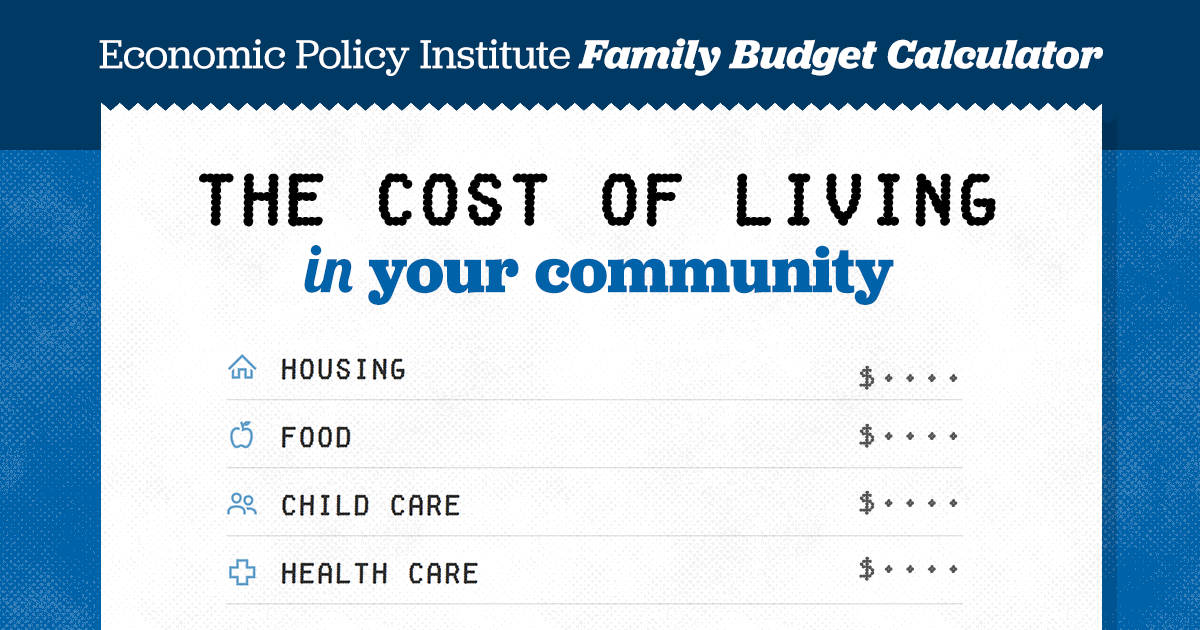
Our team of economists furthered the impact of EPI’s family budget calculator by showing local advocates how to use the tool to inform their choices in determining a living wage in their communities.
Demonstrating the U.S. economy’s extraordinary strength in 2024
EPI’s research put the recovery from the COVID-19 pandemic in its historical and international context, highlighting how much faster and more equitable growth was after 2019 relative to the years before, and how much better the U.S. balanced progress in fighting inflation and keeping unemployment low than its international peers.
AI and the labor market
While many may point to AI and other technologies as an apolitical cause of alibi behind potentially rising inequality, EPI published research demonstrating that it is policy choices that have eroded workers’ power and driven wage suppression, not technology.
PREE
In 2024, our Program on Race and Ethnicity in the Economy (PREE) provided disaggregated analysis of economic outcomes for communities of color that revealed more nuanced economic narratives beyond the topline numbers.
Limited English proficiency impacts on AAPI populations
Our research demonstrated that different histories of social and economic integration within U.S. society, along with disparities in language access, contribute to inequalities in wages, income, and poverty within the AAPI community.
Uncovering issues behind low unemployment numbers
We revealed major labor market differences for Black workers in Maryland and Alabama, despite similar unemployment rates. Progressive policy choices in Maryland produce much higher Black employment-to-population ratios and a more worker- friendly labor market than in Alabama.
Historic gains for Hispanic employment
While a strong labor market delivered gains for Hispanic workers writ large, differences remain among demographic groups. We described disparate labor market outcomes of Hispanic workers by national origin and gender during the recent economic recovery.
Engagement with our union partners
PREE Director, Dr. Valerie Wilson, spoke at AFSCME’s Black History Month event on the “Staff the Front Lines” campaign and the importance of public-sector employment in supporting economic recovery and racial equity. Dr. Kyle Moore, a PREE economist, presented at SEIU’s HBCU Summer Southern Institute for Worker Justice program at North Carolina A&T State University.
Racial justice focus at EARNCon
PREE collaborated on EARNCon 2024, organizing a plenary and three workshops. Despite the cancellation of the in-person conference due to Hurricane Francine, our team hosted “PREE Plenary: Facts, Fiction and Countering the Anti-DEI Backlash” virtually.
Policy
In-depth labor and policy analysis
EPI’s Policy team published a range of reports in 2024, including highlighting and defending the actions the National LaborRelations Board has taken to protect workers’ rights under the Biden administration, setting the record straight on the contributions of immigrant workers to the U.S. economy, and providing in-depth analyses of union membership and major strike numbers from the Bureau of Labor Statistics.
Technical assistance and public comments
EPI submitted three public comments and defended more than a dozen final rules on issues related to temporary work visas, retirement security, and heat standards. EPI provided technical assistance to dozens of congressional offices and federal agencies on issues regarding artificial intelligence, teacher pay, retirement security, trade, and taxes.
Impactful congressional testimonies
EPI testified before Congress and federal agencies four times in 2024. This includes EPI President Heidi Shierholz testifying before a Senate Banking Subcommittee’s hearing on the FTC’s ban on noncompete agreements.
Promoting the benefits of immigration at the state level
EPI teamed up with the Immigration Research Initiative to release fact sheets touting the benefits of immigration in many states, earning coverage in local outlets in Wisconsin, Virginia, Colorado, Maine, and Arizona, to name a few.
State Policy and the Economic Analysis and Research Network (EARN)
EARN is a nationwide network of research, policy, and advocacy organizations fighting, state by state, for an economy that works for everyone.
The EARN team was heavily involved in both the Alaska and Missouri minimum wage ballot wins
We ran the numbers describing the impact of both measures, and it was EPI subgranted funds (back in 2021) that enabled grassroots partners in the state to assemble the coalition that drove the Missouri campaign.
Successful campaigns against school vouchers
Our EARN partner in Kentucky—with EPI support—helped lead the successful campaign against establishing school vouchers there. The ballot measure that would have allowed the state to direct public funds to private schools failed 65% to 35% at the ballot.
Shining a light on child labor
After EPI put the issue on the national radar and coordinated a working group of EARN partners to guide discussion in their state, lawmakers in seven states enacted legislation strengthening child labor laws. Illinois Governor J.B. Pritzker's signing statement quoted an EARN team member.
“Rooted in Racism” garners wide recognition
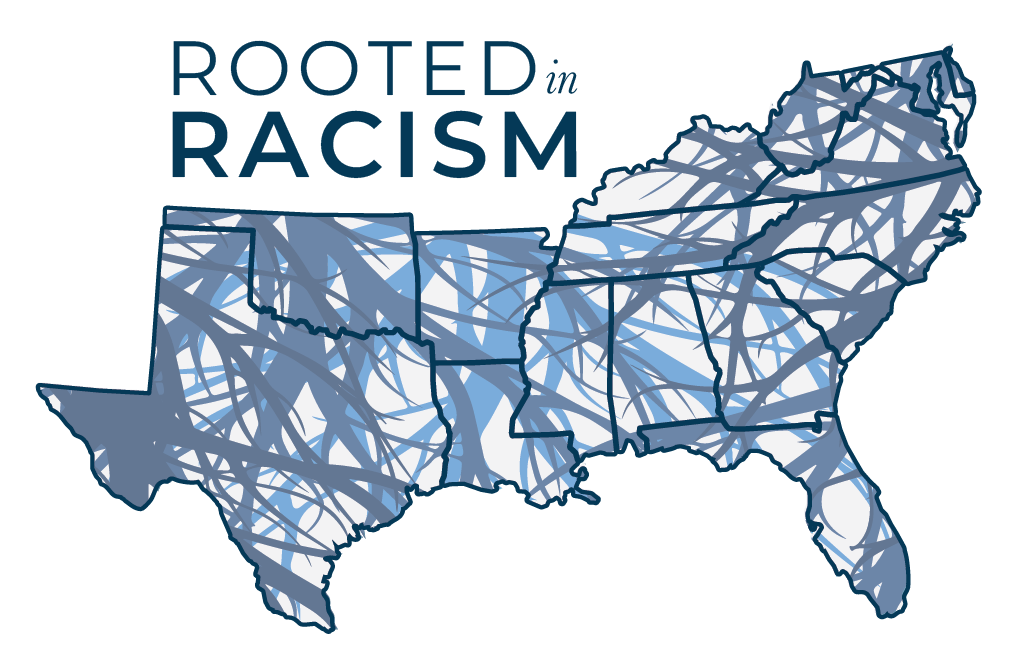
With our series, “Rooted in Racism,” EPI analysts detail the evolution of the Southern economic development strategy; its failure to deliver the promised economic and employment growth; and the poor job, wage, and income outcomes for Southern workers. Lead author Chandra Childers presented on the series in numerous events, including at the Democracy Alliance, the Pitchfork Economics podcast, and an EPI-hosted Instagram townhall.
EPI analysis on progressive ballot measures
Our analysis of pro-worker measures that passed in the 2024 election earned coverage in Business Insider, CNBC, Vox, NPR’s Planet Money podcast, Marketplace, and more.
Highlighting the school bus driver shortage
EPI published follow-up research on the bus driver shortage, as the initial report from 2023 continued to earn widespread coverage across the country, including in CBS News, Pittsburgh NPR, Tulsa World, Fox Business, Slate Magazine, and The Denver Gazette.
Virtual EARNCon 2024
Despite the cancellation of our in-person conference due to Hurricane Francine, the EARN team rapidly pivoted to a condensed virtual conference that we made open and free to the entire EARN community. We held two plenary sessions—one on the anti-DEI backlash and one on seizing the worker organizing moment—and six workshops on protecting immigrant workers, fighting school vouchers, and leveraging federal climate investments to create good union jobs, among other topics.
Read our most recent Impact Reports
 Download the 2022 Impact Report
 Download the 2021 Impact Report
 Download the 2020 Impact Report