401(k)s are an accident of history
401(k)s were never intended to replace pensions, so it should be no surprise that they aren’t up to the task. This has been pointed out before, but it’s nice to be reminded that even the people who came up with the 401(k) concept now “lament the revolution they started,” to quote an excellent article by the Wall Street Journal’s Timothy W. Martin.
This is the kind of negative coverage that keeps the folks at the Investment Company Institute busy. Students of spin may want to check out the industry lobby’s latest effort, which obscures the dismal record of 401(k) plans by lumping them in with traditional pensions. It also focuses on retired seniors, ignoring the growing number who can’t afford to stop working.
Careful readers will note that even the ICI’s rosy report shows that decades into the 401(k) revolution seniors received $105 billion dollars in pension income and only $29 billion from 401(k)-style plans in 2014. Admittedly, this is based on somewhat unreliable household survey data and ignores the fact that many well-off 401(k) and IRA participants treat retirement savings plans as tax shelters and avoid withdrawing money from them as long as possible. Still, it’s a stretch to suggest that the looming retirement crisis is a mirage caused by poor data (see also here and here).
Why unemployment will keep dropping in 2017
This post originally appeared on Fortune.com.
The economy has been steadily recovering from the 2007–08 Great Recession and is expected to continue heading toward full employment in the next year or two. Many signs suggest that we are not there yet—notably below-target wage growth and still-depressed labor force participation. The prime-age labor force participation rate—the share of the population 25–54 years old that is either working or looking for work—remains 1.7 percentage points below its pre-recession level.
Unfortunately, the return to a full employment economy—one where additional demand in the economy will not create more employment—has been slower than necessary, as it faces an uphill battle against the relentless pursuit of austerity at all levels of government. But if the economy continues growing anywhere near its current rate of about 175,000 to 200,000 additional jobs per month, the labor market in 2017 will absorb new and returning workers and the unemployment rate could easily get below 4.5% for the year.
Over the last several years, the unemployment rate has seen a steady fall from a high of 10% in 2009 down to a recent low of 4.6% last month. In recent months, there has been a tug of war between a lower unemployment rate and an increase in labor force participation. For instance, last month, the drop in the number of unemployed workers was mostly due to a fall in the size of the labor force. As the economy gains strength, more would-be workers are expected to return (or enter) the labor market as job prospects improve. Over the past year, slight improvements in unemployment have been made even as participation has increased.
The new year brings higher wages for 4.3 million workers across the country
At the start of the new year, 19 states increased their minimum wages, lifting the pay of over 4.3 million workers.[i] This is the largest number of states ever in a given year to increase their minimum wages absent an increase in the federal minimum wage. In seven of these states (Alaska, Florida, Missouri, Montana, New Jersey, Ohio, and South Dakota) the increases were due to inflation indexing, where the state minimum wage is automatically adjusted each year to match the growth in prices, thereby preventing any erosion in the real value of the minimum wage. The increases in the remaining 12 states were due to legislation or ballot measures approved by voters.
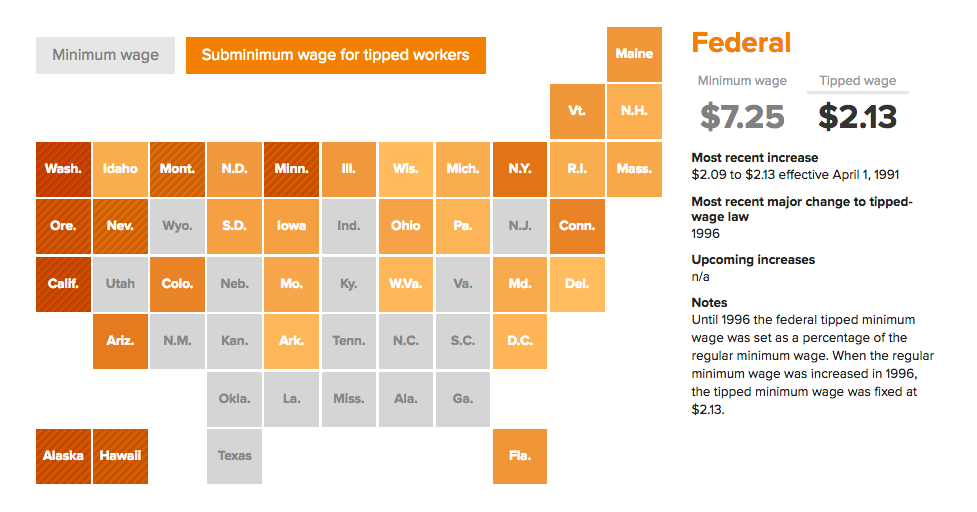
The table below shows the values of the minimum wage increases and the number of workers directly affected in each state. Due to relatively low inflation in 2016, small inflation-linked increases of only 5 cents will occur in four states (Alaska, Florida, Missouri, and Ohio). The largest increases were the result of ballot measures passed in Arizona (a $1.95 increase) and Washington (a $1.53 increase). In these and other states instituting legislative increases, a significant portion of the wage-earning workforce will directly benefit from the increase in the minimum wage: Arizona (11.8 percent), California (10.7 percent), Washington (10.7 percent), Massachusetts (9.2 percent), and Connecticut (7.6 percent). It should be noted that these estimates likely understate the total numbers of affected workers, because they do not include workers who are paid just above the new minimum wage. Many of these workers will also receive a wage through “spillover effects,” as employers adjust their overall pay ladders.
The Obama legacy: creating more, better jobs
This post originally appeared on TalkPoverty.org.
During his 2016 presidential campaign, president-elect Donald Trump promised that if he was elected, “the American worker will finally have a president who will protect them and fight for them.” Creating good-paying and high-quality jobs is definitely a worthwhile goal for the president to increase Americans’ living standards and decrease poverty.
Despite the president-elect’s claim that there are “no jobs,” the labor market has improved at a remarkably steady rate as the country worked its way out of the deep recession. During the past six years, there has been job growth each and every month, and a 5 percentage point drop in the unemployment rate. In part, that’s due to President Obama’s Recovery Act, which stimulated growth, provided aid to states, and invested in infrastructure. The rescue of the auto industry saved at least 1 million jobs, and kept an entire region out of a severe depression.
In 2015, most Americans finally started to feel the benefits of the recovery. Income rose for the typical American household, and the poverty rate saw one of the largest single-year declines in almost 50 years—primarily due to improvements in the labor market.
UN Special Rapporteur offers sharp criticism of American temporary foreign worker programs
On December 19, one day after International Migrants’ Day, Maria Grazia Giammarinaro, the United Nations Special Rapporteur on Trafficking in Persons, Especially Women and Children, issued a statement regarding her official visit to the United States to assess the country’s state of affairs on human trafficking. During her trip, Giammarinaro met with government officials, diplomats, trafficking survivors, and representatives from civil society. While she praised the United States for developing “an impressive number of laws and initiatives which focus on the protection of victims,” especially the Victims of Trafficking and Violence Protection Act and its subsequent reauthorizations, she offered up sharp and insightful criticisms of the nonimmigrant visa programs that temporarily authorize migrants to work in the United States:
The legal framework governing temporary visas for migrant workers, especially H-2A visa for temporary or seasonal agricultural work and H-2B visa for temporary or seasonal non-agricultural work visas, is of particular concern as it exposes applicants to the risk of exploitation, including human trafficking. Workers holding these temporary visas are tied to a specific employer who can exercise extensive control over them. Employers often confiscate passports, withhold wages, terminate contracts arbitrarily and threaten employees with job loss and deportation. Some live in deplorable housing conditions, commute long distance and enjoy low benefits. This is a serious problem in itself, but it is exacerbated by the fact that concerned workers may fear that if they report abuses, they will be deported or denied future visa applications. This situation creates vulnerabilities to labour exploitation, such as unsafe working conditions and isolation, especially in rural areas where there are fewer service providers. In order to prevent further harm, it will be essential to amend the regulation governing these temporary visas, as well as to those of Exchange visitor (J-1) and domestic workers (G-5) visas, and make visa “portable” to allow workers to change abusive employers.
In time for Christmas: a “progressive” Social Security plan Scrooge would love
Donald Trump ran a campaign that rejected Republican orthodoxy on a variety of issues. He consistently and emphatically rejected the party line on slashing social insurance programs like Medicare and Social Security. And yet, Congressional Republicans are ploughing ahead with plans to gut these benefits. The latest proposal, from House Social Security Subcommittee Chairman Sam Johnson (R-Texas), actually slashes benefits even more than would be sufficient to close Social Security’s projected shortfall. The extra savings generated by these cuts is used to reduce taxes on higher-income households.
Johnson attempts to camouflage the draconian nature of his plan with targeted benefit increases for low earners. Despite this window dressing, as many low earners will see cuts as will see increases, according to the Social Security Actuary’s analysis of the plan. This hasn’t stopped budget hawks from touting its supposed progressivity, pointing to a benefit formula more tilted in favor of low earners and an increase in the special minimum benefit going to those with steady work histories. However, for most workers, including many low earners, these provisions are more than offset by benefit cuts.
The first major plank of the Johnson plan revises the overall benefit formula for retirees. By itself, this provision would increase benefits for roughly half of workers (the 51 percent with earnings below 90 percent of the average wage index) while reducing them by a greater amount for the other half. Johnson also introduces a revised special minimum benefit that would increase benefits for around 37 percent of workers. However, other provisions increase the normal retirement age (equivalent to an across-the-board cut) and enact a range of other cuts. On net, only one in four workers (26 percent) would come out ahead from Johnson’s plan, while 70 percent would see benefit cuts, with some workers seeing cuts of up to 74 percent based on the examples modeled in the Chief Actuary’s analysis.
Criminal justice policy is education policy
In a new report, Mass Incarceration and Children’s Outcomes, we argue that criminal justice policy is education policy, and should be high on educators’ lists of concerns.
Several police killings of young men in African American neighborhoods, as well as the national racial polarization exposed in the recent presidential campaign, have called increased attention to our unresolved racial inequalities, including the disproportionate numbers of African American men who are in jail or prison. In the last months of his administration, President Obama responded to excessive federal prison sentences with a stepped up rate of commutations.
President-elect Trump, in contrast, has advocated a nationwide policy of “stop-and-frisk,” a police practice concentrated in low-income minority neighborhoods that invariably leads to the arrest and eventual imprisonment of men, African American men in particular, for non-violent victimless crimes.
“Stop and frisk,” as well as excessive sentencing for minor crimes, are not primarily federal policies, and once in office, Mr. Trump will have little influence over them. These are policies and practices of local and state governments, and reform is no less realistic or urgent now than it was before the presidential election.
SoftBank: Great press, bad for manufacturing, services, and the economy
Last week, President-elect Donald Trump took to Twitter to claim that Masayoshi Son, CEO of SoftBank of Japan, had agreed to invest $50 billion in the United States toward businesses and create 50,000 new jobs, and that “Masa said he would never do this had [Trump] not won the election!” As usual, the claim that Trump negotiated this deal is disputed, since SoftBank had announced plans to create a $100 billion technology investment fund, together with a public investment fund of Saudi Arabia, in October, before the election.
Worse yet, this deal is lose, lose, lose for the domestic economy. First, this inflow of foreign capital will bid up the U.S. dollar, which will reduce the competitiveness of U.S. manufacturing by making imports cheaper and exports more expensive. This will increase the U.S. trade deficit and reduce employment in U.S. manufacturing. The U.S. dollar has gained about 25 percent in the past two-and-a-half years, and one-fifth of that increase has occurred since the election. As a result, the trade deficit in manufactured goods increased sharply in 2015 and is poised for another increase after the recent run-up in the dollar. Meanwhile, the United States has lost 78,000 manufacturing jobs since the first of the year due, in part, to the rising trade deficit.
Second, foreign investment in the U.S. economy is dominated by foreign purchases of existing U.S. companies. Between 1990 and 2005, foreign multinational companies (MNCs) acquired or established domestic subsidiaries that employed 5.25 million U.S. employees. The vast majority (94 percent) of jobs associated with those investments were in existing firms acquired by foreign MNCs. However, 4 million of those jobs disappeared through layoffs or divestiture of part or all of those companies, as shown in my 2007 paper, The Hidden Costs of Insourcing. A classic example was the acquisition of IBM’s PC business by Chinese computer maker Lenovo in 2005. Lenovo shut down PC production in the United States and substituted PCs made in China and elsewhere in Asia. So PC production jobs in the United States disappeared.
We can’t meaningfully integrate schools without desegregating neighborhoods
This article first appeared on the NAACP Legal Defense Fund‘s website.
A bill introduced in the New York City Council proposes to establish “an office of school diversity within the human rights commission dedicated to studying the prevalence and causes of racial segregation in public schools and developing recommendations for remedying such segregation.”
But it is not reasonable, indeed it is misleading, to study school segregation in New York City without simultaneously studying residential segregation. The two cannot be separated.
School segregation is primarily a problem of neighborhoods, not schools. Schools are segregated because the neighborhoods in which they are located are segregated. Some school segregation can be ameliorated by adjusting school attendance boundaries or controlling school choice, but these devices are limited and mostly inapplicable to elementary school children, for whom long travel to school is neither feasible nor desirable. We have adopted a national myth that neighborhoods are segregated “de facto;” i.e., because of income differences, individual preferences, a history of private discrimination, etc. In fact, neighborhoods in NYC are segregated primarily because of a 20th century history of deliberate public policy to separate the races residentially, implemented by the city, state, and federal governments. Just a few examples:
How the Fed can fix one way the economy really is rigged: Restore the pursuit of full employment as their job number one
The election of Donald Trump alerted many to what should have been obvious long ago: the U.S. economy has failed to deliver the goods to vast swathes of American families for decades. In the context of Trump’s election, this economic failure was often characterized as being unique to white working-class voters in the upper Midwest. But this is wrong. Income growth has been sluggish, and hourly wage growth near-zero, for low and middle-income families across-the-board in recent decades. And many measures of racial income and wage gaps have actually worsened in recent years. In short, the income not going to white working-class residents of the upper Midwest has not been accruing to black and Latino workers; it’s instead just been funneled to the very top of the income distribution.
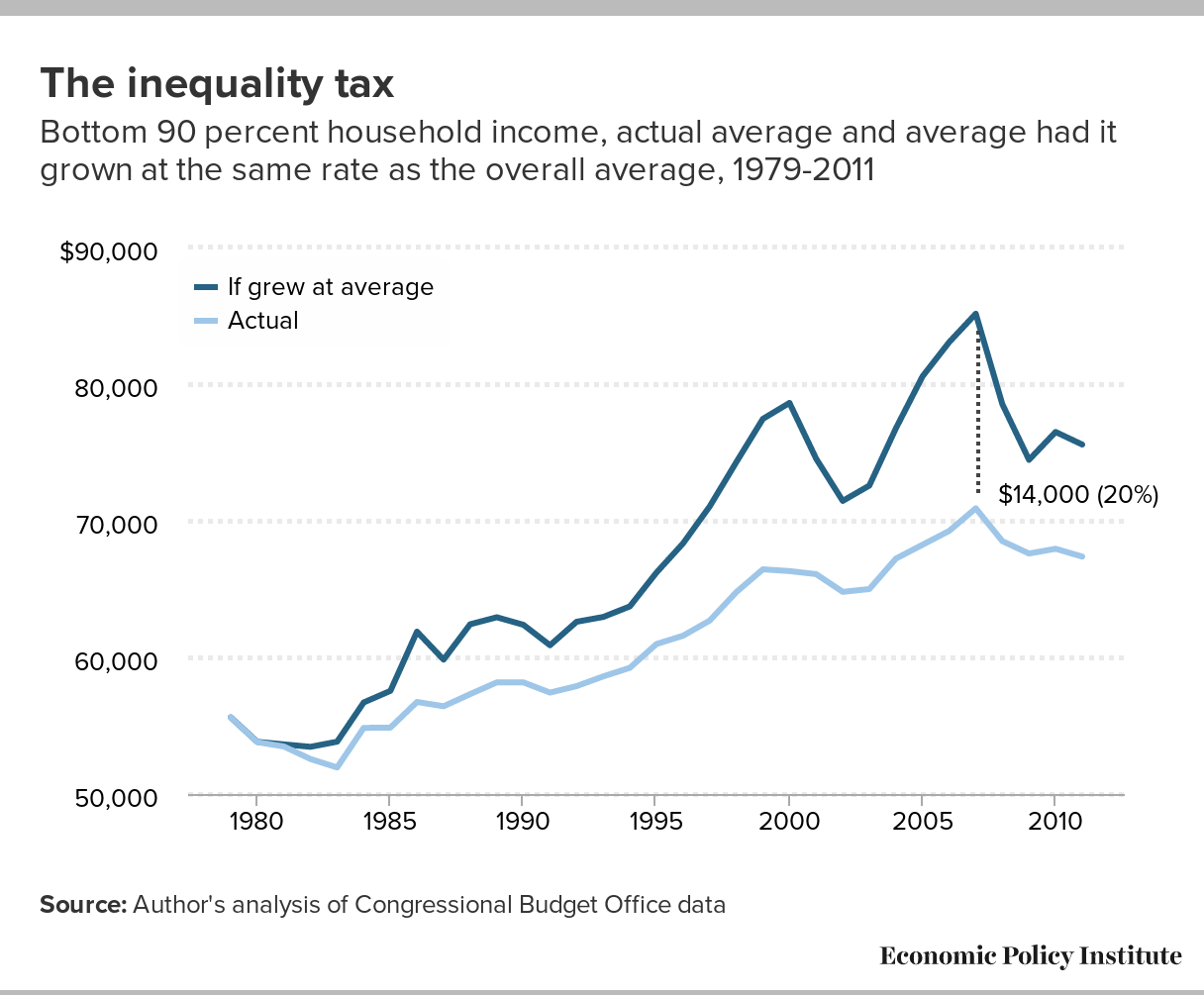
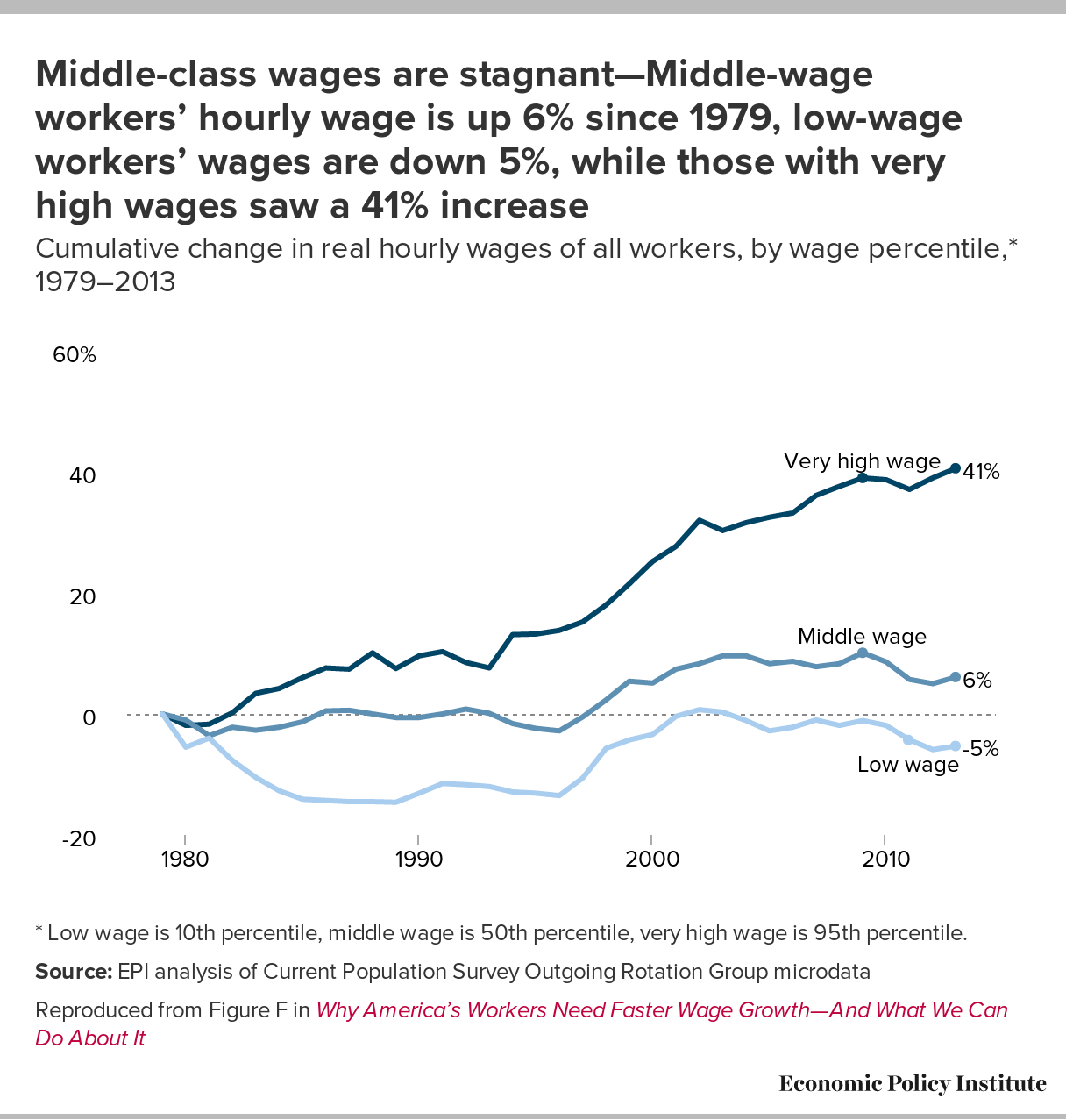
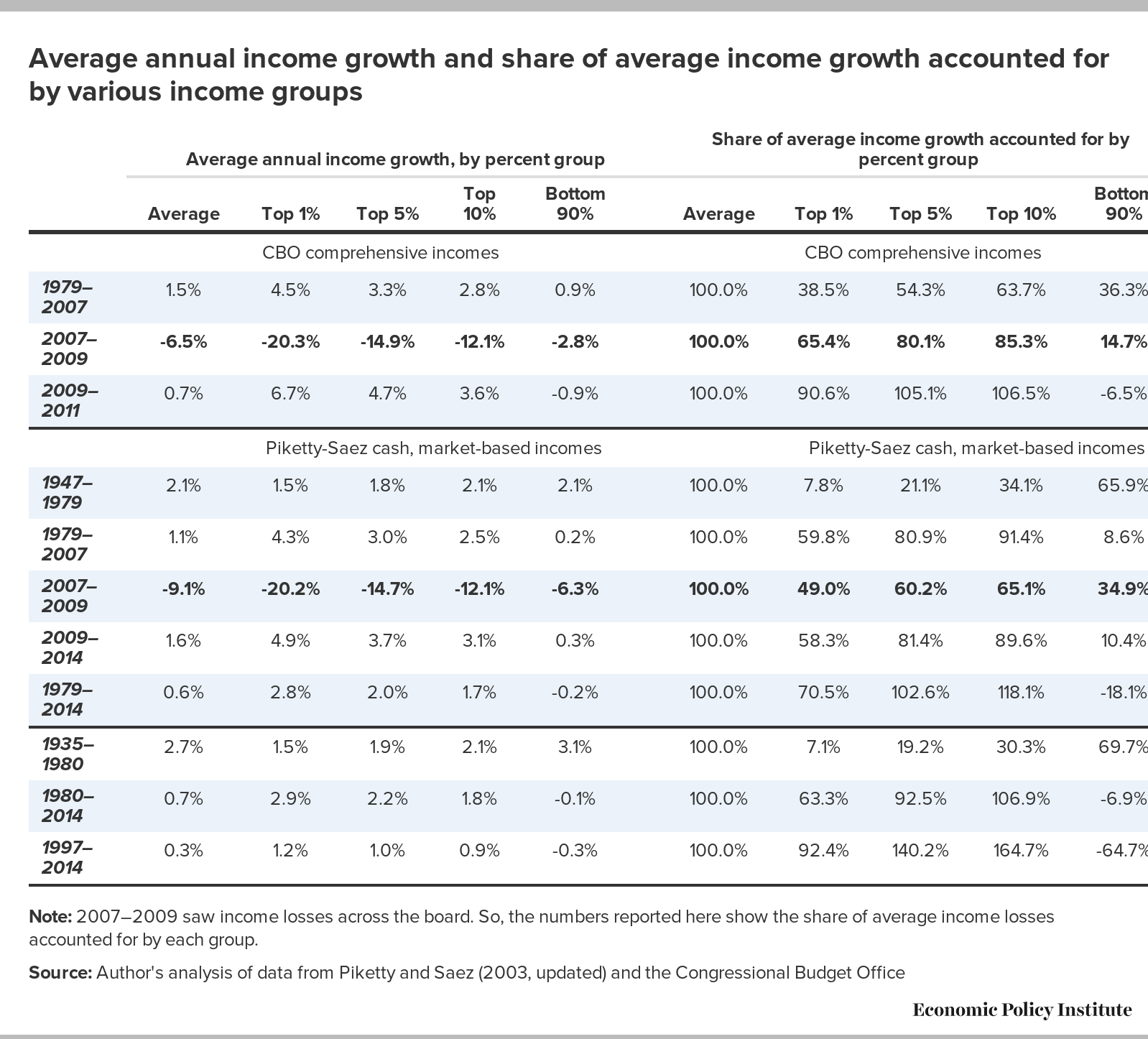
It’s not just politically important to realize that the economy’s failure to deliver income growth is not just a niche problem of white working-class voters in former manufacturing regions. This realization should also tell us something important about the economics of how to fix this. Too many have jumped to the conclusion that there’s just not much we can do for those workers that have been left behind in recent decades, because their troubles are mostly driven by huge, untamable forces like technological change and globalization. Here’s the astute economics writer Adam Davidson on Slate’s Political Gabfest podcast:
I know Hillary Clinton’s economic team fairly well, and I’m very impressed by them. They really are top-notch economists and economic policy thinkers. They don’t have anything for a 55-year-old laid-off factory worker in Michigan or northeastern Pennsylvania. Or whatever. They don’t have anything to offer them. And so I think it’s intuitively understandable that a screaming, loud, wrong answer is more compelling than a calm, reasonable, accurate, right answer: Your life is going to be worse for the rest of your life.