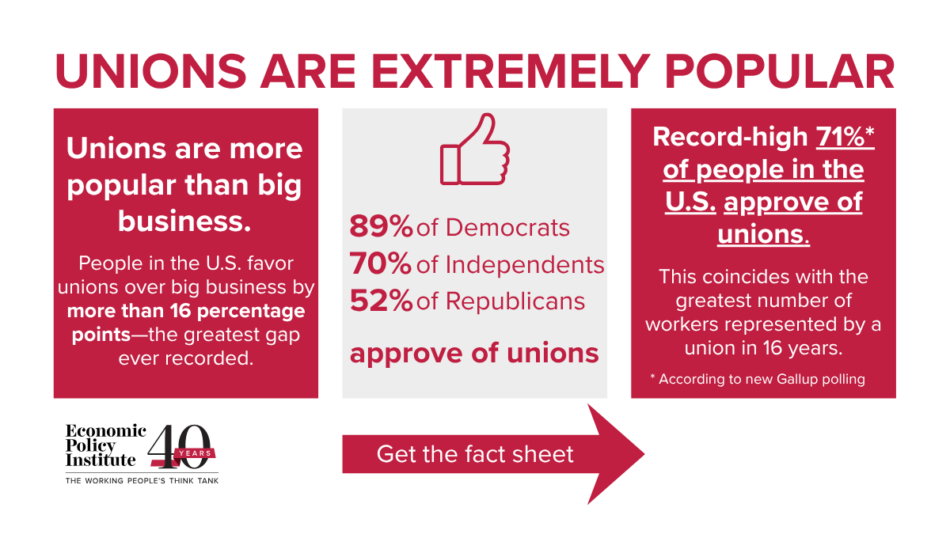
 Unions
 Right to work
 Education
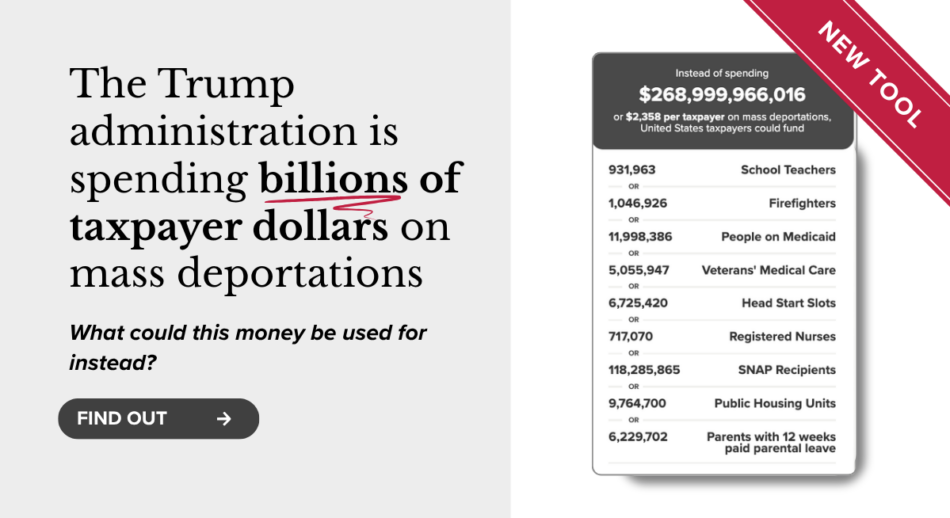 Immigration
Latest Research
-
Unions are extremely popular: 56 million workers would join a union if they could
-
Wages are lower in “right-to-work” states: These states have lower unionization rates and more anti-worker policies
-
Everything you need to know about anti-union “right-to-work” laws
-
The teacher pay penalty remained high in 2025: Teachers and students nationwide are still paying the price of decades of neglect
-
The case for tripling union membership: How rebuilding union power would strengthen workers, the economy, and our democracy
Blog
-
2025 Census data preview: Key measures of earnings, income, and poverty may show early signs of a softer labor market and weaker safety net
-
The answer to a stronger economy is more union power
-
Hiring rebounded in August, but long-term unemployment continued to rise
-
New legislation would boost the overtime pay premium and benefit 13.4 million workers: The Double Wage for Overtime Act extends worker protections
-
Affordability’s key ingredient is union power: Tripling union membership would raise wages, reduce inequality, and strengthen communities. Policymakers should take note.
-
U.S. economy lost 23,000 jobs in July as wage growth slowed
-
Thirty states have passed a version of the CROWN Act to ban hair discrimination: Continued action needed more than ever as Trump administration abandons equity
EPI in the news
-
Lima News Ohio | September 11, 2026
-
Springfield News Sun | September 11, 2026
-
Stacker | September 11, 2026
-
The Hill | September 11, 2026
-
Charleston Gazette-Mail | September 11, 2026
-
Sun Sentinel | September 11, 2026
-
WLRN | September 11, 2026