EPI is the working people’s think tank.
For 40 years, EPI has fought for an economy that works for working people, with rigorous, cutting-edge research and policy analysis that equips organizers with the tools they need to win.
These are the tools and reports, people keep coming back to.
The Family Budget Calculator
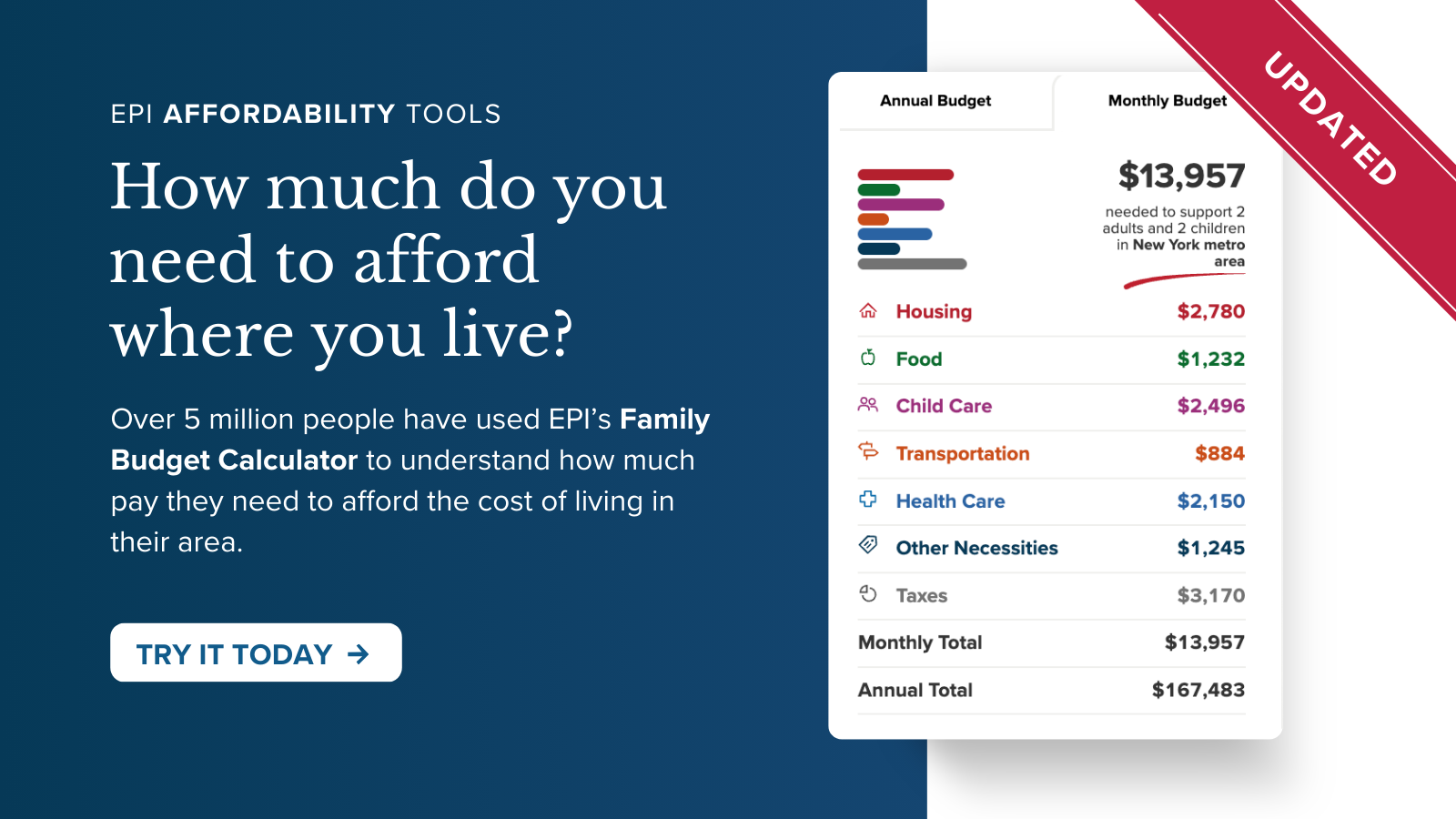 Too many workers don't earn enough to cover their family's basic needs. See the true cost of living in every county and metropolitan area with EPI's Family Budget Calculator.
What constitutes a living wage?
This guide shows policymakers, employers, and advocates how to set living wage standards based on EPI's Family Budget Calculator.
Child care costs in the U.S
Child care costs more than public college tuition in 38 states. See what it costs where you live.
Low wage workforce tracker
 Millions of workers are paid extremely low hourly wages. EPI breaks down the data by state, gender, race, union status, and more to see who's affected.
Wage Suppression in 10 Charts
 Intentional policy choices have suppressed wages for typical workers since the 1970s. Ten charts trace these choices and what they cost workers.
Identifying the policy levers generating wage suppression and wage inequality
Since the 1970s, intentional policy choices have suppressed wages for typical workers. This report identifies the specific policies, from weakening labor standards to eroding collective bargaining, that suppressed pay.
Pay-productivity gap
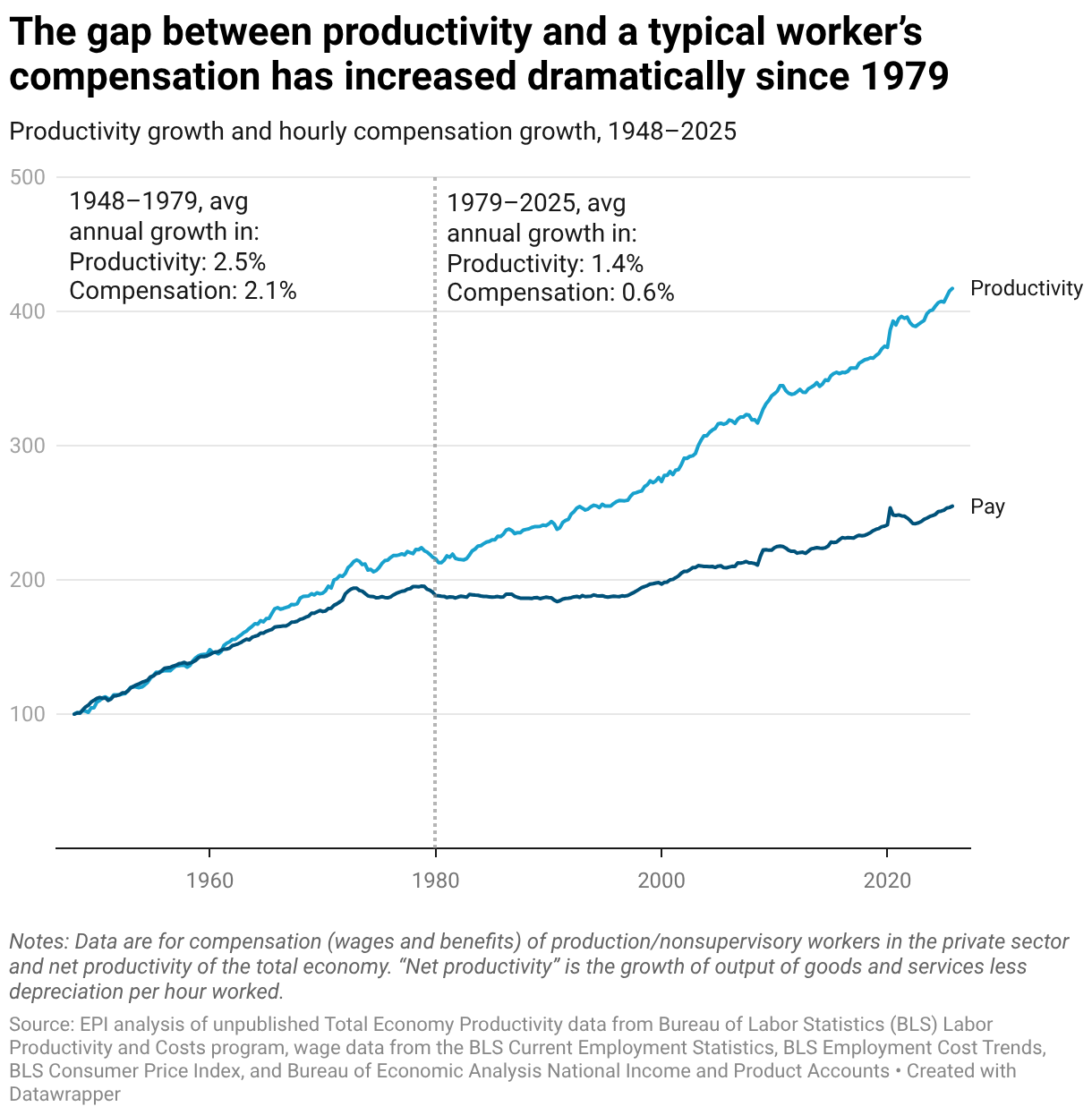 Our famous Productivity-Pay Tracker shows that working people’s wages haven't kept up with productivity growth since 1979—and that gap continues to grow.
CEO pay
 CEOs are paid 325 times more than typical workers—and not because they work 325 times harder. EPI tracks skyrocketing CEO pay and what can be done about it.
Minimum wage tracker
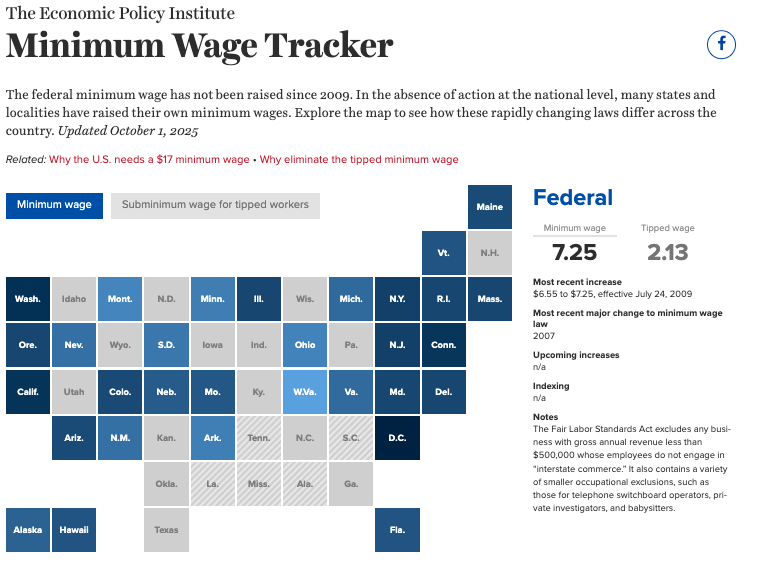 The federal minimum wage hasn't budged since 2009. EPI's Minimum Wage Tracker maps which states, cities, and counties are filling the gap and which are dragging their feet.
Setting high standards for a Federal minimum wage
Frozen at $7.25, the federal minimum wage is now worth less than at any time in 77 years. Raising the minimum wage to $20 an hour by 2030—two-thirds of the median wage—and automatically updating it every year would lift pay for nearly 40 million workers.
The case for tripling union membership
What would America look like if we tripled union membership? Our new report shows that typical workers would get an annual raise of $7,700, racial wage gaps would narrow, and democracy would be strengthened.
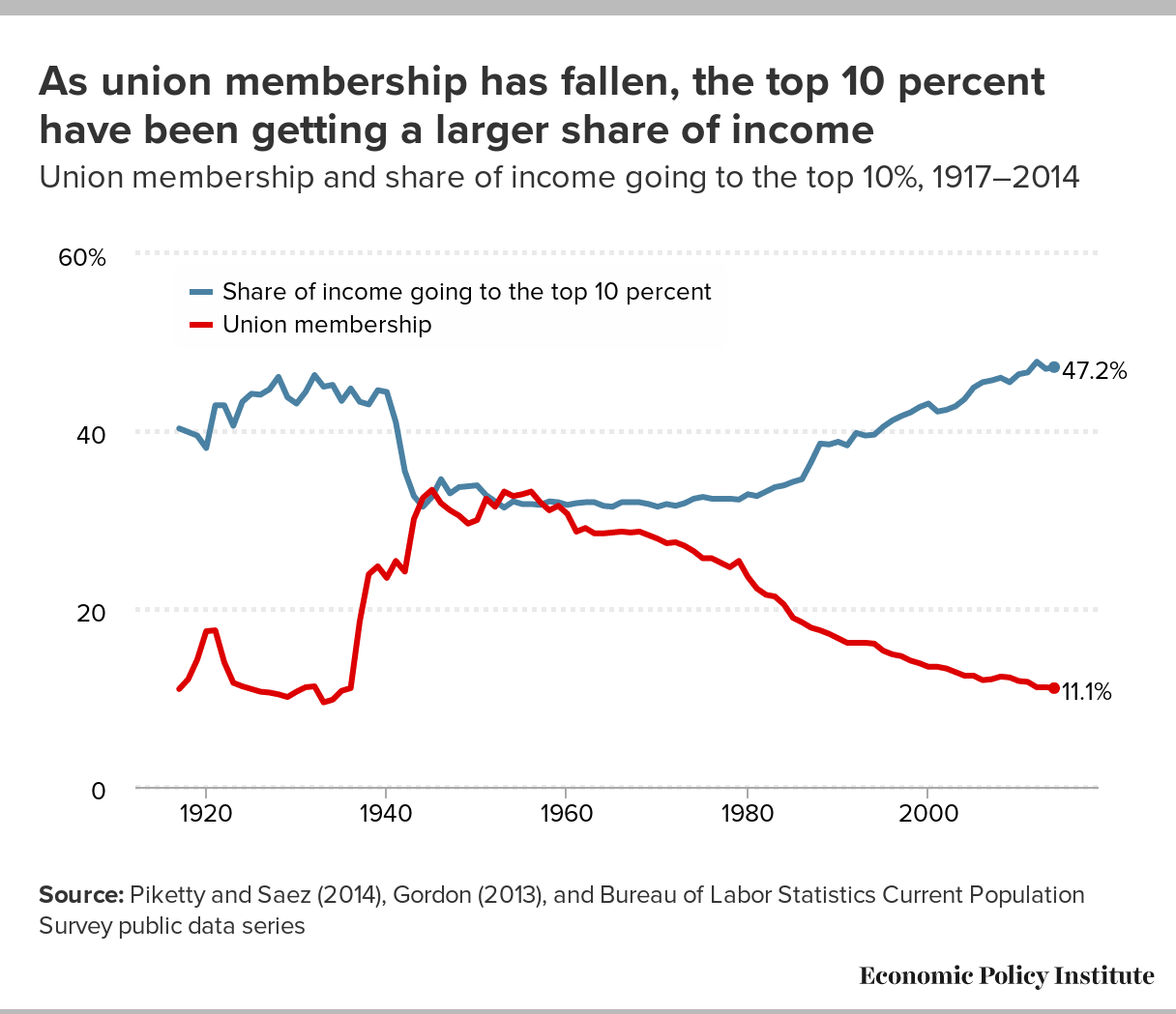 The power of unions, in a single chart
As union membership declines, inequality rises. EPI's chart tells the story.
The cost of deportations calculator
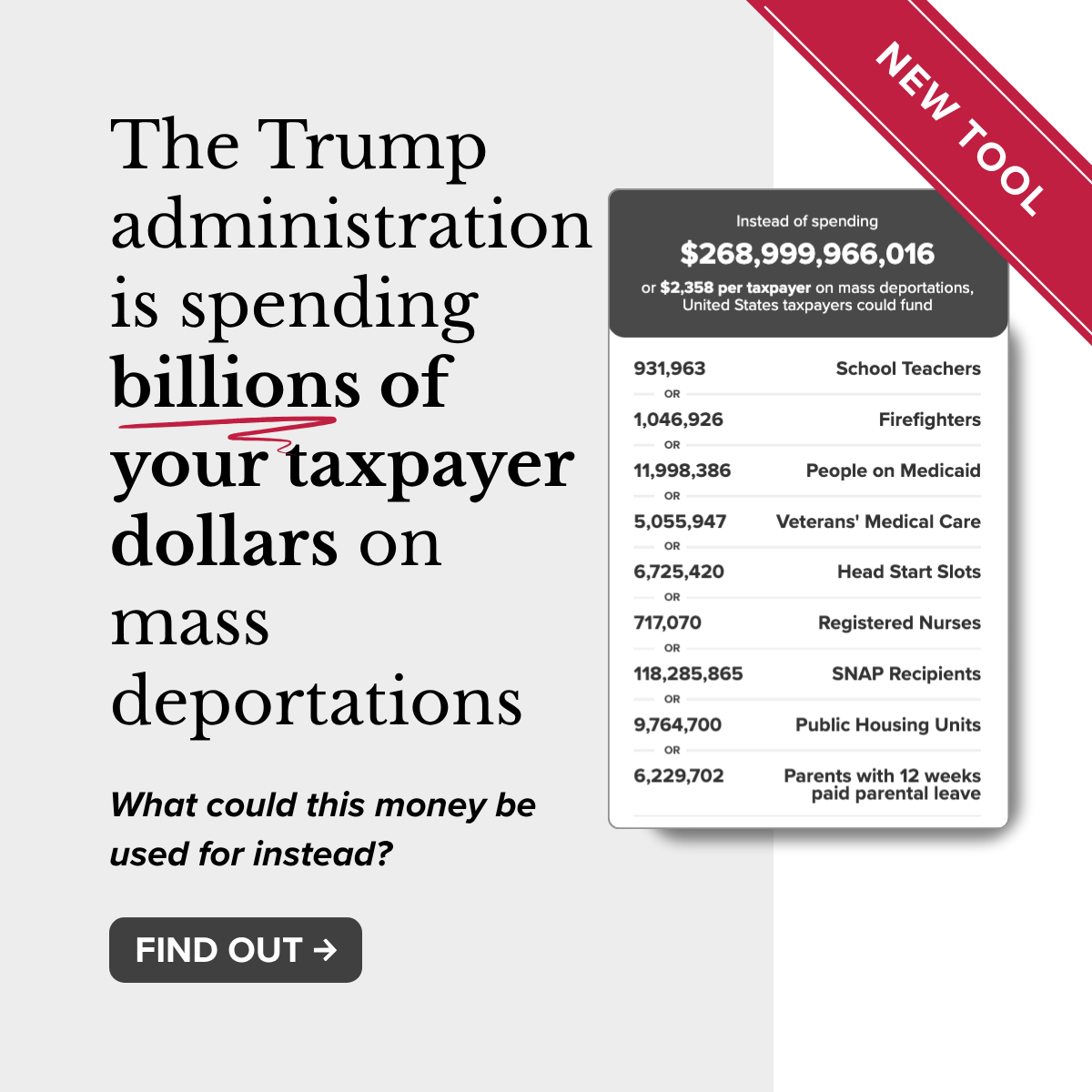 Every dollar spent on mass deportations is a dollar not spent on housing, health care, or education. Our calculator shows how many federal tax dollars are being spent on mass deportations—and what those funds could be used for instead in your state.
Trump’s deportation agenda will destroy millions of jobs
Mass deportations will eliminate millions of jobs held by immigrant and U.S.-born workers, according to EPI’s analysis. Construction and child care will be the most affected industries.
The teacher pay penalty remained high in 2025
 In 2025, teachers earned 25.2% less than comparable college graduates. EPI tracks the growing teacher pay penalty, which undermines the quality of public education.
U.S. investment in public education is at risk
 Our report details the threats facing U.S. public K–12 education—from state budget cuts to the rise of voucher programs—and what policymakers should do about it.
Understanding black-white disparities in labor market outcomes requires models that account for persistent discrimination and unequal bargaining power

State Unemployment by Race and Ethnicity
Racial unemployment gaps persist nationwide. EPI alone tracks Black, Hispanic, AAPI, and white unemployment rates by state, every quarter.
Rooted in Racism and Economic Exploitation
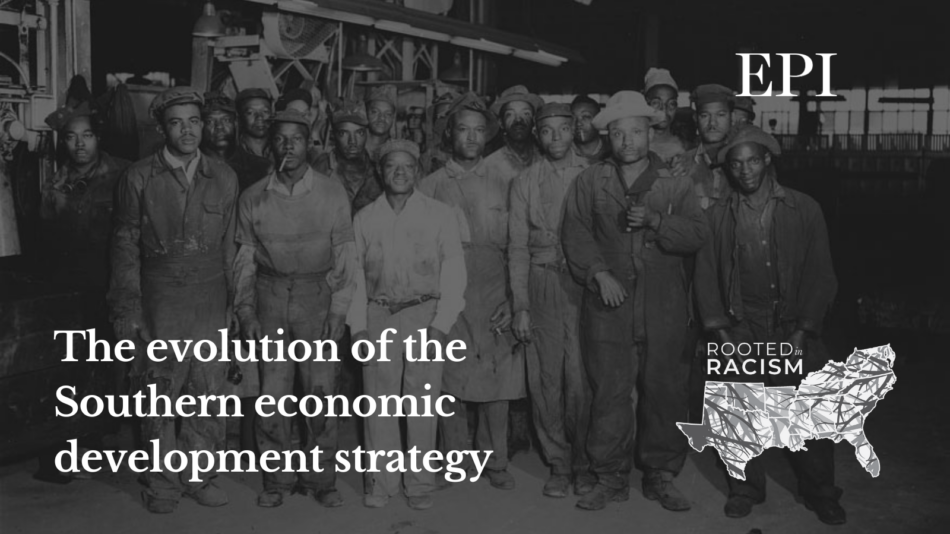 This series details how the Southern economic development model has failed to create shared prosperity in the region. In fact, this model was deliberately designed to do the opposite—to extract the labor of Black men and women for as little compensation as possible.
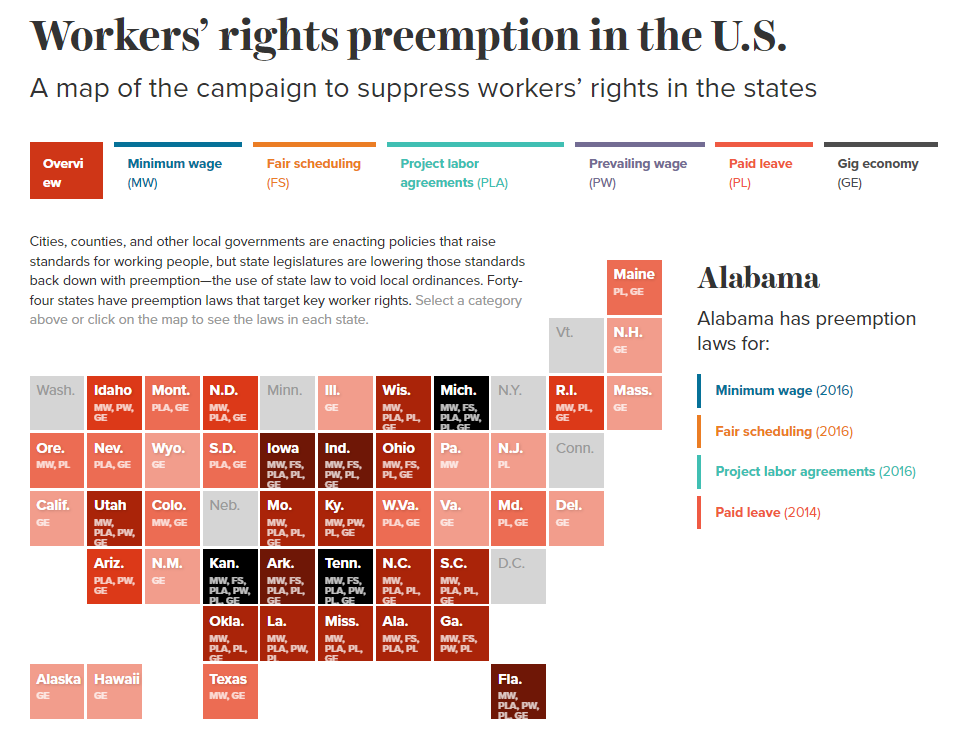
State of Working America Data Library
Our Data Library provides decades of customizable economic data on everything from jobs and pay to unions and inequality—easily accessible and available for download.